Beer + Grub + Music | 460 Spadina Ave. Back to Top


Poutine began as a combination of fries, cheese curds, and gravy in rural Quebec, but inventive twists now surface from Seoul to São Paulo. Bulgogi poutine swaps brown gravy for sweet soy beef and kimchi, while the butter chicken poutine found in Toronto ladles spicy tomato sauce over paneer and fries. Some Israeli cafes offer sabich poutine, topping the dish with fried eggplant, tahini, and hard boiled egg. Portion sizes vary widely: classic servings in Quebec often reach 400 grams, but street vendors in Berlin serve compact 200 gram bowls for convenience. Cheese curds are replaced by mozzarella, halloumi, or local soft cheeses in many regions.

Thick-cut fries, sturdy enough to hold a range of sauces, form the backbone of poutine’s adaptability. The mild flavor of cheese curds leaves room for bold regional interpretations, which explains its frequent reinvention in cities known for culinary fusion.
| Signature Ingredient | Base Sauce | Cheese Used | Region |
|---|---|---|---|
| Pulled pork | Barbecue | Aged cheddar | Southern United States |
| Masala blend | Spiced curry | Paneer | Mumbai |
| Kimchi | Gochujang glaze | Mozzarella | Seoul |
| Lobster chunks | Shellfish cream | Cheddar curds | Atlantic Canada |
| Shredded nori | Soy gravy | Regular curds | Tokyo |
Menus that feature four or more distinctive poutine varieties tend to attract a broader range of diners. Using a local cheese or sauce often wins repeat visitors looking for a new twist.
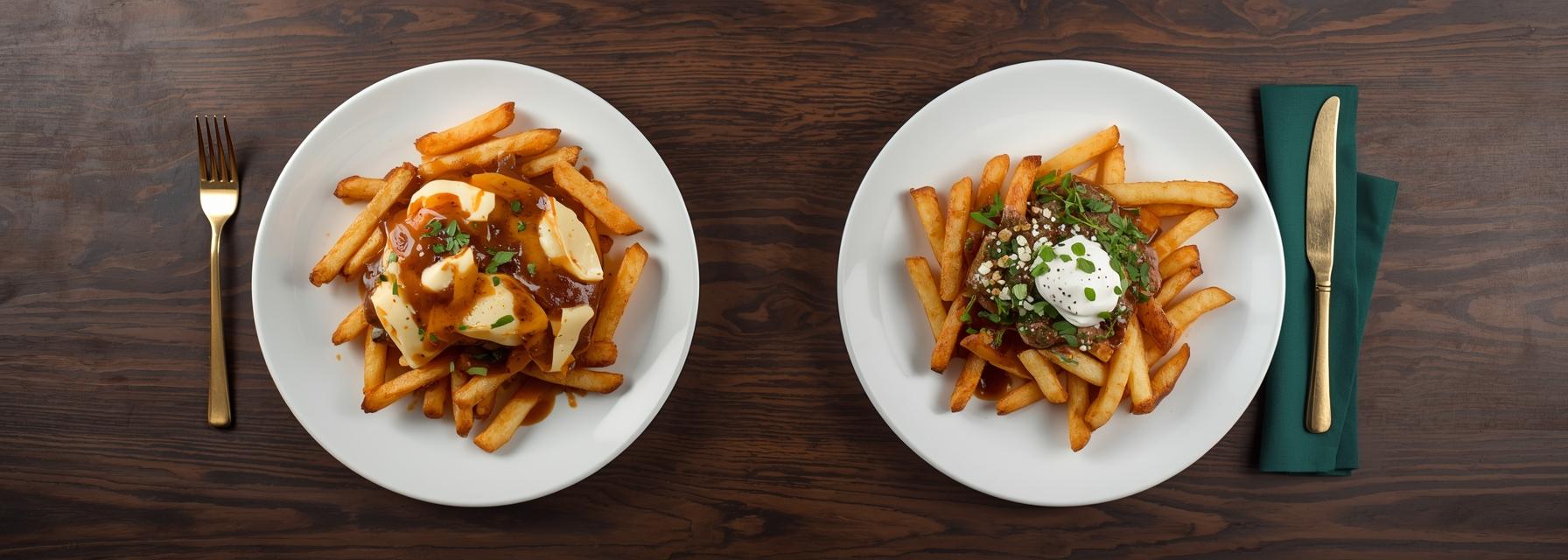
Three ingredients define classic poutine in Quebec: fries, cheese curds, and brown gravy. Some newer versions swap one or more elements, raising debate about authenticity and taste.
Calling a dish poutine when it uses shredded cheese or skips gravy confuses both locals and tourists. Authenticity demands at least fries, curds, and a hot gravy to bind them.
A poutine with shredded chicken instead of cheese curds will spark heated debate in Quebec, where many insist only fries, cheese curds, and brown gravy qualify as authentic. Meanwhile, menus in New York or Melbourne freely swap in pulled pork or spicy sauces, reflecting local tastes and ingredients.
For many purists, the absence of fresh cheese curds is the single factor that disqualifies a dish from being considered true poutine.
Dishes using cheddar shreds or mozzarella in place of cheese curds often face rejection from traditionalists, who see these as mere loaded fries. Some Canadian regions now use regionally produced cheese curds to claim authenticity, even when other toppings enter the mix.
Menus in Montreal, Melbourne, and Tokyo now feature poutine creations that would have surprised even its Canadian originators. Some kitchens replace the usual cheese curds with blue cheese or kimchi, while others introduce toppings like smoked brisket, butter chicken, or even seaweed. This global experimentation brings new textures and flavors to the familiar dish, challenging what qualifies as poutine.
Poutine’s global journey often surprises even seasoned food travelers. In several cities outside Quebec, local chefs have reimagined the dish using unexpected regional ingredients or culinary traditions. Some of the most inventive takes on poutine appear in places few would expect:
Seasonal street food festivals accelerate these local adaptations, sometimes turning a single eatery’s experiment into a citywide trend. Asking market vendors about their twist on poutine often leads to the most original discoveries.
Signature poutine offerings at prominent restaurants often hinge on a single bold twist that sets them apart from the standard. This focus on originality in toppings or preparation draws both purists and culinary thrill-seekers for a taste that lingers in memory.
At a famed Montreal diner, duck confit and a rich demi-glace sauce replace the usual gravy and curds, resulting in a deeply savory dish. The duck is braised until tender and served over crisp fries, drawing crowds who crave something beyond tradition.
In Tokyo, a contemporary bistro serves poutine with fried nori, wasabi mayonnaise, and a soy-based glaze. The combination delivers an intense umami punch, and regulars describe the contrast of textures as surprising and addictive.
Overlooking these inventive takes means missing out on the flavors that have built each establishment’s reputation. Reservations are often needed, especially on weekends, as word-of-mouth drives high demand.
Distinctive poutines emerge when chefs incorporate local ingredients or bold culinary mashups. Sampling these versions reveals how far the dish has traveled from its roots.
Beer + Grub + Music | 460 Spadina Ave. Back to Top


© 2016 Let's Be Frank, Inc.